Category: Reviews

  • Flashcards – Create your own learning resources

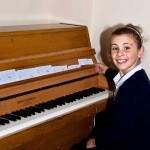
    Since the start of term I have been using a variety of flashcards intensively with my students to improve note recognition in sight reading . It has proved to be popular with my students as they can compete to see who can accurately read and play the notes in a shortest space of time. Some of them have even made their own set of flashcards so that they can practise using them outside lessons and get ahead of the competition. Filipa was keen to show me the cards she had made at home and having worked with them at home she was able to shave 5 seconds from her reading time the following week!

    If you don’t fancy making your own flashcards, there are a number of different sets available. I have reviewed their relative merits.
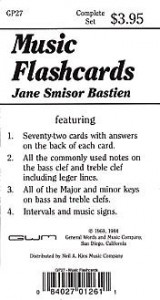

     Jane Bastien Flashcards – These are the cheapest and probably the best value flashcards on offer. They cover a wide range of notes including ledger lines as well as intervals and key signatures but no notes with sharps or flats.
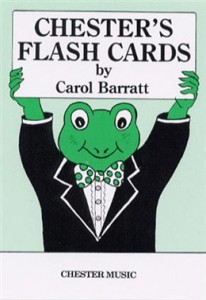
    Chester’s Flashcards – Whilst these are the most expensive, they are also larger in size than the others and laminated, making them easier to handle, quicker to flash and more durable. They don’t offer key signatures or notes on ledger lines however.
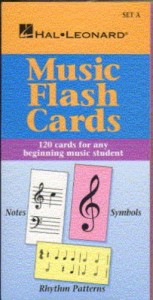
    Hal Leonard Flashcards – Though cheaper than Chester’s Flashcards, Hal Leonard offers a similar size and quality of card to the Jane Bastien set but also offers cards with per defined rhythms which can be useful for composition activities. The types of card in this set are also colour-coded, however key signatures are not included in this set.


  • Christmas Piano Music

    I first wrote this post over two years ago as “Easy Christmas Carol Books”. Having had a few queries since from parents about which music to buy their children for Christmas, I decided to add some books below with more challenging yet fun arrangements.

    “As the frosty mornings are starting to set in and christmas parties are getting booked up, it’s time to prepare some festive music so today I’m looking at what is available. So many books are promoted as ‘easy’ piano music or ‘easy to play’ but ‘easy’ is such a relative term.

    The Easiest Tune Book Of Christmas Carols - Book 1One of my favourites which truly is about as ‘easy’ as you can get is The Easiest Tune Book of Christmas Carols. Despite being in it’s fiftieth year of publication it is still one of the best. Whilst it isn’t decked with brightly coloured pictures like some of the more recent editions of christmas carols, it is easy to read, easy to play, the fingering is sensible and points where the pianist must change hand position are clearly marked with an apostrophe though the edition is designed to reduce the need for changes in hand position where possible.

    The left hand parts are also very simple and guitar chords are also given.


    Piano Time Carols from Oxford University Press is a little bit more expensive than ‘The Easiest Tune Book of…’ but it offers a more attractive front cover. Inside colour is used subtely. The carol arrangements are easy enough but a little more challenging than ‘The Easiest Tune Book’. The left hand parts use more chords and the right hand involves more changes of position.”


    For more advanced pianists, Pam Wedgewood’s JAZZIN’ ABOUT Classic Christmas arrangements are more challenging but particularly fun when played alongside the backing CD in this new edition. One of the arrangements which is most popular with my students is “Christmas Jingle”, a medley of Jingle Bells and We wish you a merry Christmas that switches between straight 4/4 time and 3/4 Jazz Waltz.


    Christopher Norton uses five well-known carols in Carol Jazz as a ‘jumping off’ point for jazz-related variations. These arrangements offer the more advanced pianists a chance to develop their own improvisation skills following a suggested routine.

  • Raindrops develop from CDE beginnings

    Many of my students will recollect the “CDE song” as one of the first pieces I taught them on the piano. The song is actually published in “Music Lessons Have Begun, by Leila Fletcher” which was a tutor book I learned from myself as a child, yes it was published that long ago! I don’t use the whole publication as I feel that Pauline Hall’s “Oxford Piano Method” series is visually more user friendly and enticing, though much of Leila’s musical content is very catchy.

    “CDE song” was the first piece Oliver learned nearly four years ago and the noteflight arrangement below is his latest piece of work which pays homage to this early experience. This is the second time his work has been featured on my website but the first time in his own notation. See African Elephant

    [powerpress] I hope that seeing this will encourage my other students who are using noteflight to experiment with their ideas and share their creative work!

  • Music Reading Games

    This week I am taking a look at some of the free music learning resources available on the internet. I have recently been using Jayde Musica with my students. Whilst it would be nice to have midi integration in this game so that you can play the notes on an attached midi keyboard rather than just typing the letter on the keyboard, the game has already aroused interest amongst my students.

    Because of the way it works, it is testing typing skills as well as note naming skills but it is still a valuable freely available resource. The addition of tenor and alto clefs mean that it is good practise for pianists studying for grade 5 theory who need to get a bit of experience at reading these clefs and otherwise wouldn’t get the chance.

    Music Match (below) looks quite interesting though once you have worked out the note it is also testing ICT co-ordination besides piano skills.

    Music Match

    Click here to play this game

  • Snowflakes (SATB Christmas Carol with piano accompaniment) by Graeme Hopson

    Having worked with this carol for 12 weeks, I have grown to really like it as have members of my choir, the Neston Ecumenical Singers.

    The words are by the American, Henry Wadsworth Longfellow. The composition came about late in 2008 as a result of an annual competition organised by The Longfellow Chorus promoting the poetry of their founder. Graeme Hopson, the composer of this setting was a finalist in the competition with this work.

    The score is available direct from the composer or from SibeliusMusic.com

    The snowfall motif in the piano accompaniment delicately flutters throughout the snowflakes’ journey described in the lyrics until the ‘troubled sky reveals the grief it feels’. The harmony takes an anguished turn at this point as the heart rate of the choir members increases whilst the parts get a little more challenging to pitch! Effervescent tranquillity returns along with the carefree snowflake motif as the third verse draws to a close with whispered revelations to wood and field.