
Tag: Resources

  • Flashcards – Create your own learning resources

    Since the start of term I have been using a variety of flashcards intensively with my students to improve note recognition in sight reading . It has proved to be popular with my students as they can compete to see who can accurately read and play the notes in a shortest space of time. Some of them have even made their own set of flashcards so that they can practise using them outside lessons and get ahead of the competition. Filipa was keen to show me the cards she had made at home and having worked with them at home she was able to shave 5 seconds from her reading time the following week!

    If you don’t fancy making your own flashcards, there are a number of different sets available. I have reviewed their relative merits.
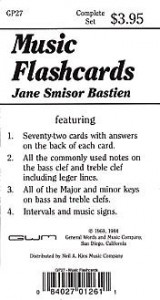

     Jane Bastien Flashcards – These are the cheapest and probably the best value flashcards on offer. They cover a wide range of notes including ledger lines as well as intervals and key signatures but no notes with sharps or flats.
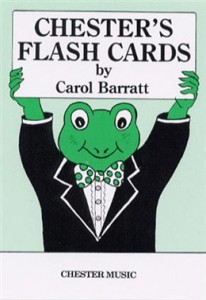
    Chester’s Flashcards – Whilst these are the most expensive, they are also larger in size than the others and laminated, making them easier to handle, quicker to flash and more durable. They don’t offer key signatures or notes on ledger lines however.
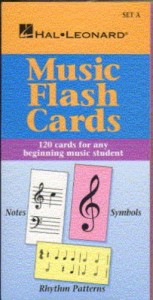
    Hal Leonard Flashcards – Though cheaper than Chester’s Flashcards, Hal Leonard offers a similar size and quality of card to the Jane Bastien set but also offers cards with per defined rhythms which can be useful for composition activities. The types of card in this set are also colour-coded, however key signatures are not included in this set.


  • Christmas Piano Music

    I first wrote this post over two years ago as “Easy Christmas Carol Books”. Having had a few queries since from parents about which music to buy their children for Christmas, I decided to add some books below with more challenging yet fun arrangements.

    “As the frosty mornings are starting to set in and christmas parties are getting booked up, it’s time to prepare some festive music so today I’m looking at what is available. So many books are promoted as ‘easy’ piano music or ‘easy to play’ but ‘easy’ is such a relative term.

    The Easiest Tune Book Of Christmas Carols - Book 1One of my favourites which truly is about as ‘easy’ as you can get is The Easiest Tune Book of Christmas Carols. Despite being in it’s fiftieth year of publication it is still one of the best. Whilst it isn’t decked with brightly coloured pictures like some of the more recent editions of christmas carols, it is easy to read, easy to play, the fingering is sensible and points where the pianist must change hand position are clearly marked with an apostrophe though the edition is designed to reduce the need for changes in hand position where possible.

    The left hand parts are also very simple and guitar chords are also given.


    Piano Time Carols from Oxford University Press is a little bit more expensive than ‘The Easiest Tune Book of…’ but it offers a more attractive front cover. Inside colour is used subtely. The carol arrangements are easy enough but a little more challenging than ‘The Easiest Tune Book’. The left hand parts use more chords and the right hand involves more changes of position.”


    For more advanced pianists, Pam Wedgewood’s JAZZIN’ ABOUT Classic Christmas arrangements are more challenging but particularly fun when played alongside the backing CD in this new edition. One of the arrangements which is most popular with my students is “Christmas Jingle”, a medley of Jingle Bells and We wish you a merry Christmas that switches between straight 4/4 time and 3/4 Jazz Waltz.


    Christopher Norton uses five well-known carols in Carol Jazz as a ‘jumping off’ point for jazz-related variations. These arrangements offer the more advanced pianists a chance to develop their own improvisation skills following a suggested routine.

  • The lonely little piano

    The Lonely Little Piano 2nd Edition Front Cover

    One of my first posts on the blog last year, reviewed a story book for piano lovers by Tom Allan, published by Penketh Publications. The book is now in second edition and has an appealing new cover design worthy of mention. 

    “… The latest book from Penketh Publications written by Tom Allan is destined to delight piano lovers aged from 8 to 80.

    “A little blue-and-gold piano was just what Jessica and Jack had always wanted. But as the children grew older they played it less and less. The little piano was lonely – until he was joined by a strange new companion!”

    Available only direct from the publisher, priced £4.99 …”

  • Metronomes on phones

    I recently posted information about a low cost metronome from Lidl. This got me thinking about a number of other metronome devices I have used in the past. As a peripatetic music teacher I need to have a metronome with me all the time as many schools do not have one built into the piano. The most obvious option to save on carrying a seperate ‘black box’ unit around with me to perform the important metronome function is one integrated into a mobile phone, something most of us carry around wherever and whenever.

    The option I have used for the past few months is Beats Metronome, a freeware application for Windows smartphone which is a very small download performing the basic function of a numeric keypad in which you enter the ‘beats per minute’ tempo you require then press start. 

    Prior to that I have used K Metronome for the duration of the trial period but found it to be a little over complicated and too fussy for what I needed and what I imagine most people would need. A nicer looking one for which I went as far as purchasing the license when the trial period was over was the Vito Metronome which is nice looking with a selection of skins and choice of time signatures. However when I needed to upgrade the ROM on the smartphone and reinstall Windows Mobile, the application would not accept the regestration key I had paid for and an email to the russian customer support service was fruitless.

    Prior to owning a windows smartphone, I used a java metronome application on my Nokia 6230 from op111 productions. This works on any mobile phone which supports java applications (which is most modern mobile phones). It is feature rich but not over complicated like the K metronome mentioned earlier. However after the first three free uses the application costs 12.95 Euros, comparable if a little cheaper than a stand alone metronome device however once it’s installed on your old phone then as far as I know it is not possible to then transfer it if you upgrade your mobile phone without downloading and registering another copy of the application.

    A further java option for mobile phones which I have not personally tested is available from metronomeonline.com though this seems to represent better value at only $5.99.

    If you happen to have a standard web browser open and available while you are teaching/rehearsing then the flash web metronome at metronomeonline.com that looks and functions very much like a traditional stand alone Seiko metronome only it sits insde your web browser. 

    For apple Itouch or Ipod users, a nifty metronome application called Orfeo has recently been released by Chromatic Bytes. Having tried this out on a friend’s Itouch, I could certainly recommend it as it is very easy to use and features a chromatic tuner/pitch pipe and tap tempo sensing as well as ‘beats per minute’ entry, all for a reasonable (given the current £ to $ exchange rate) $9.99 from Apple Itunes Store.

  • 3 in 1 Metronome and Tuner – £7.99 from Lidl

    Cheap Metronome and Tuner

    Whilst many digital pianos have a metronome facility on board, many have no way of easily setting the number of beats per minute. I frequently recommend that every student of music should have a metronome of some description and this offering from Lidl doubles up as a chromatic tuner.

    At £7.99 this is a must for every musician’s christmas stocking. Available from Lidl from 30th October