What does your child need for piano lessons?
You don’t need an expensive acoustic piano to begin learning, but having a suitable instrument readily available at home makes a huge difference. The important thing is to choose something that feels enough like a piano for your child to develop good technique and, just as importantly, something they can easily sit down and play.
Digital piano or keyboard?
For most families buying their first instrument, I recommend a digital piano with 88 full-size weighted keys.
Weighted keys are important because they respond more like the keys of an acoustic piano. This helps students develop control over dynamics, touch and technique.
Digital pianos also have some very practical advantages: they don’t need tuning, they can usually be played through headphones and they take up less space than an acoustic piano.
A smaller portable keyboard can be enough to get started, particularly if you already own one. However, if you’re buying an instrument specifically for piano lessons, I’d generally recommend investing in an 88-key weighted digital piano rather than buying a smaller keyboard that may soon need replacing.
A sensible minimum: Yamaha P-45
If you’re buying a digital piano for lessons, I would regard the Yamaha P-45 as a sensible minimum benchmark. It has 88 full-size weighted keys and gives a beginner a proper piano-style playing experience without paying for lots of extra features they don’t really need.
The P-45 has now been succeeded by newer Yamaha models, but it remains a very good option if you find one at the right price.
Affiliate disclosure: if you buy through this link, I may earn a 3% commission at no extra cost to you.
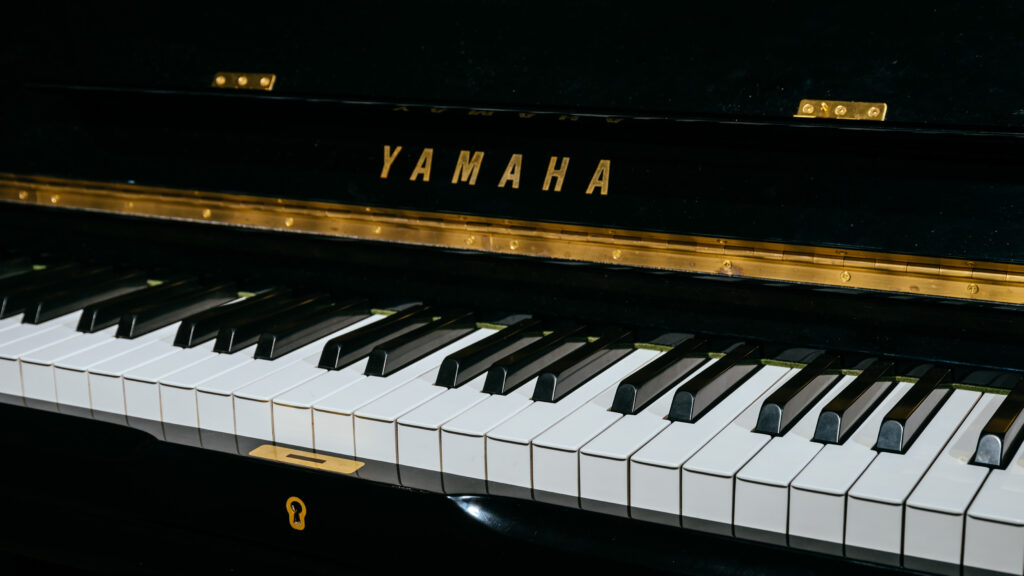
What should I look for?
88 full-size keys
- weighted/touch-sensitive keys
- sustain pedal
- proper adjustable piano stool/bench
- sensible music rest
- preferably a dedicated stand rather than permanently balancing it on the dining table
There are lots of additional sounds, rhythms, apps and features available on modern digital pianos. Some can be useful and fun, but they’re much less important than getting the basic keyboard and playing position right.
Create a piano nest
Where you put the instrument matters too.
I like the idea of creating a piano nest: a comfortable, welcoming space where the piano feels like a natural part of family life.
Many of my students practise in the living room, and I think that’s a very good place for a piano. It doesn’t need to be hidden away in a spare room where somebody has to make a special trip to practise.
Keep the music nearby. Have a pencil ready. Make sure the stool is comfortable and at the right height. If the piano is somewhere your child naturally passes and can easily sit down for five minutes, they’re much more likely to play it.
Do I need to spend a fortune?
No.
A straightforward digital piano from an established manufacturer can be an excellent instrument for many years of lessons. I’d prioritise the quality and feel of the keyboard over lots of extra features.
I’d also consider buying a good used instrument rather than choosing a brand-new but very basic keyboard simply because it costs less.