
A creative composition project
Autumn Leaves is a creative piano project in which students compose their own music from a simple starting point. It combines listening, improvising, composing, performing and gradually writing musical ideas down.
What are we doing?
Will explains the project, demonstrating how a student might improvise, develop and write down an 8 bar melody
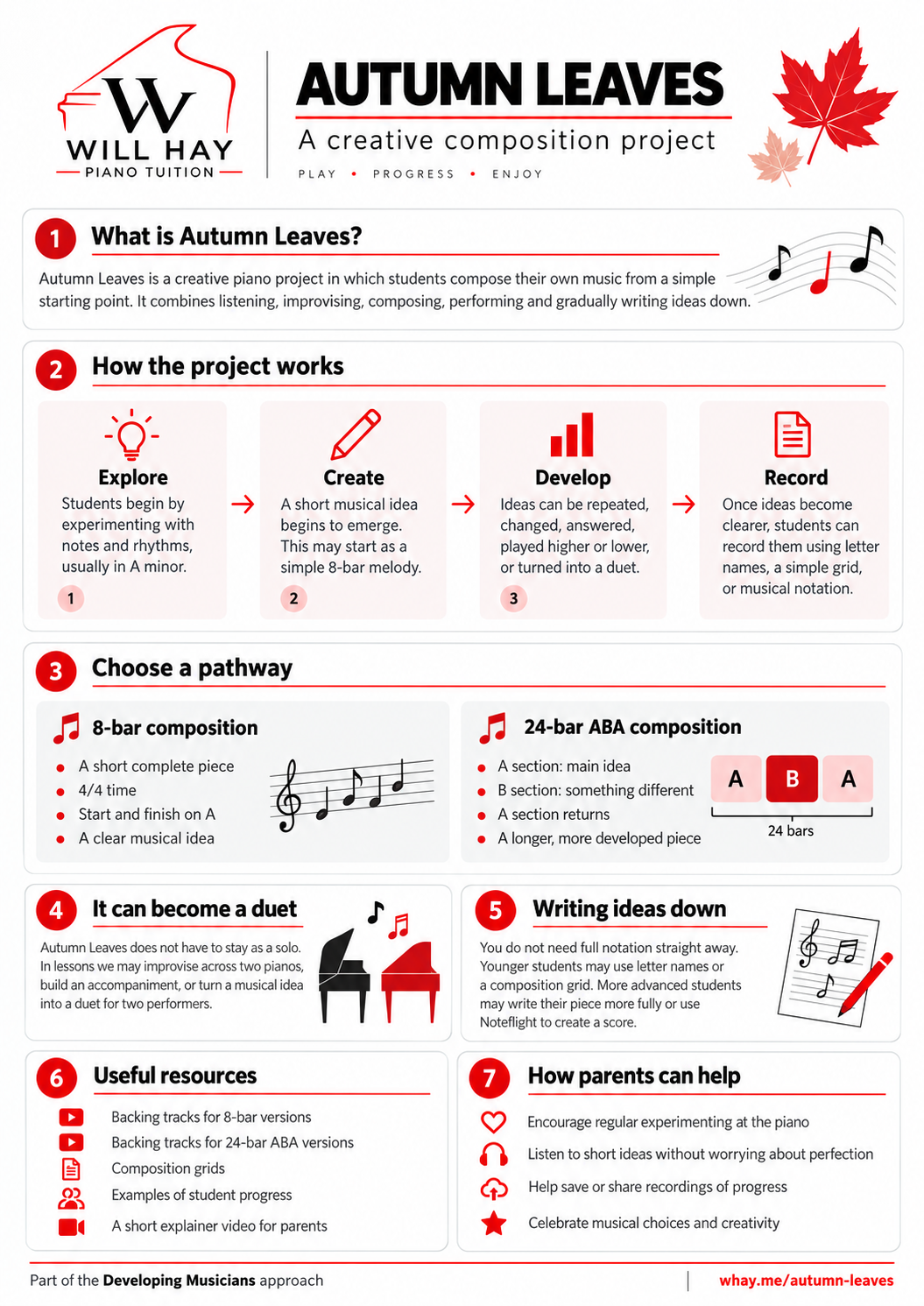
How the project works
Explore
Students begin by experimenting with notes and rhythms, usually using notes from A minor.
Create
A short musical idea begins to emerge. This may start as a simple 8-bar melody.
Develop
Ideas can be repeated, changed, answered, played higher or lower, or developed into a duet.
Record
Once ideas become clearer, students can record them using letter names, a simple grid or musical notation.
Choose a pathway
8-bar composition
- A short complete piece
- 4/4 time
- Start and finish on A
- A clear musical idea
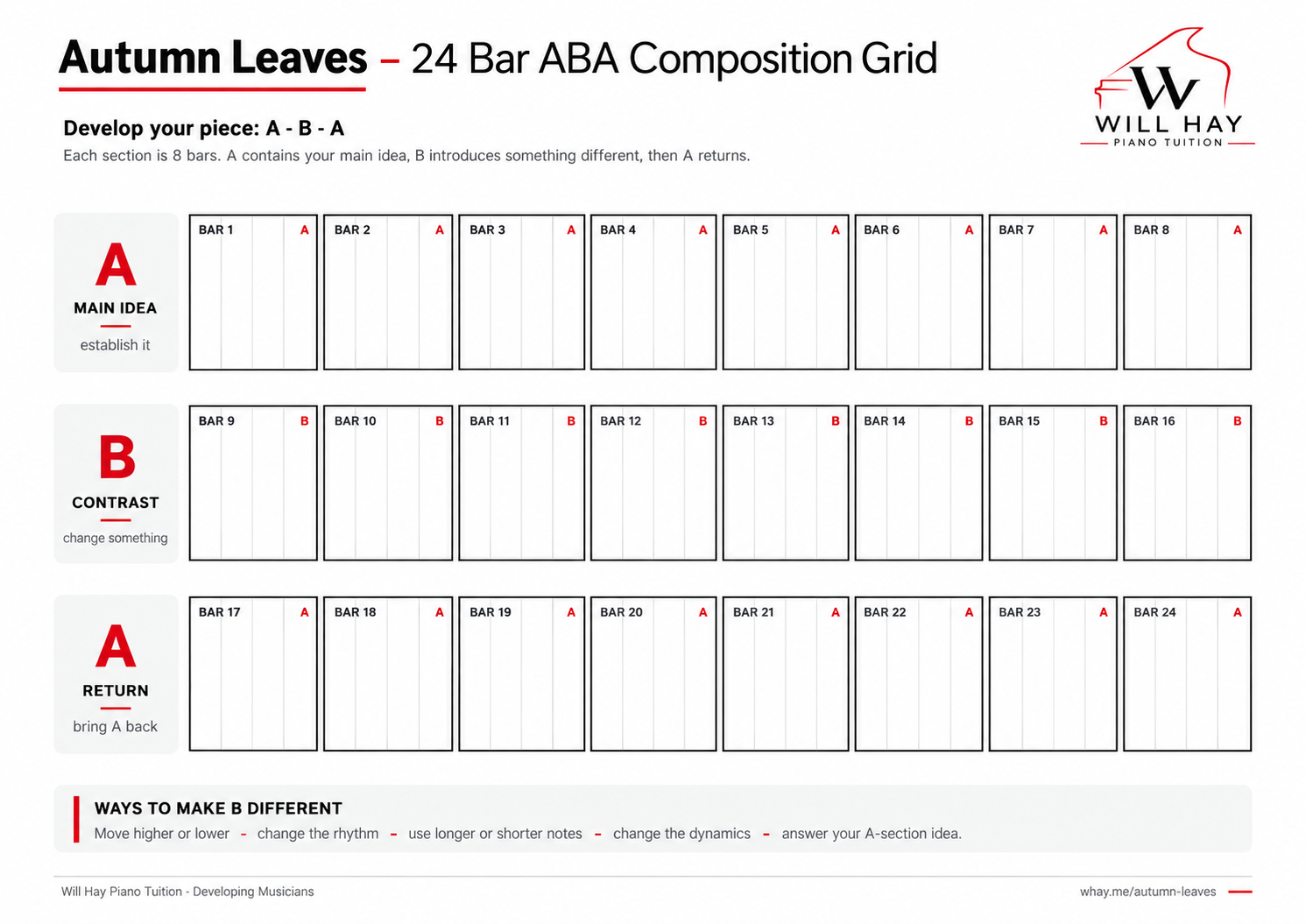
24-bar ABA composition
- A: main musical idea
- B: something different
- A: the opening returns
- A longer, more developed piece
It can become a duet
Autumn Leaves does not have to stay as a solo. In lessons we may improvise across two pianos, build an accompaniment, or turn a musical idea into a duet for two performers.
One pianist might play the composed melody while another creates an accompaniment, or two players might improvise and respond to one another before deciding which ideas they want to keep.
Writing ideas down
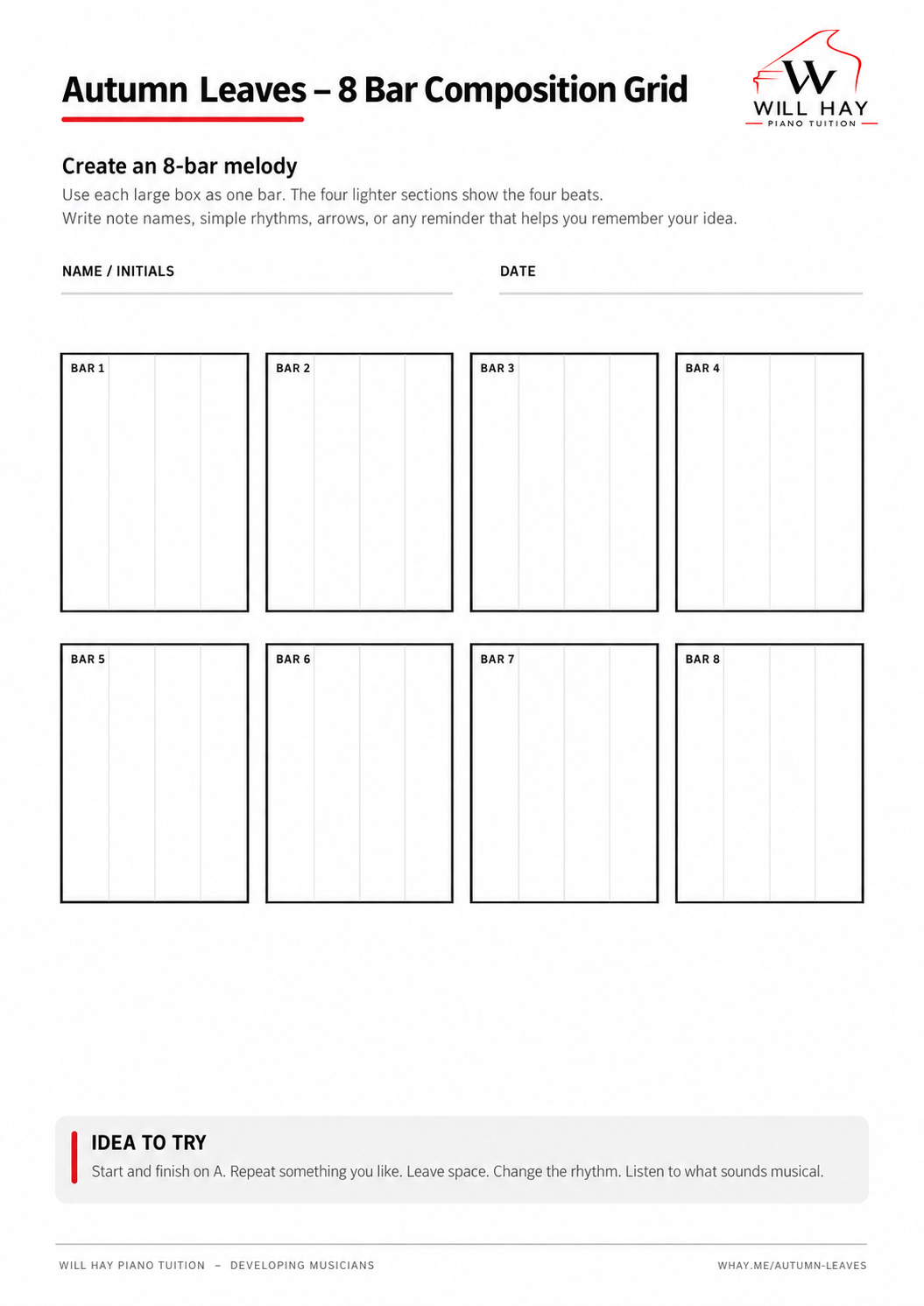
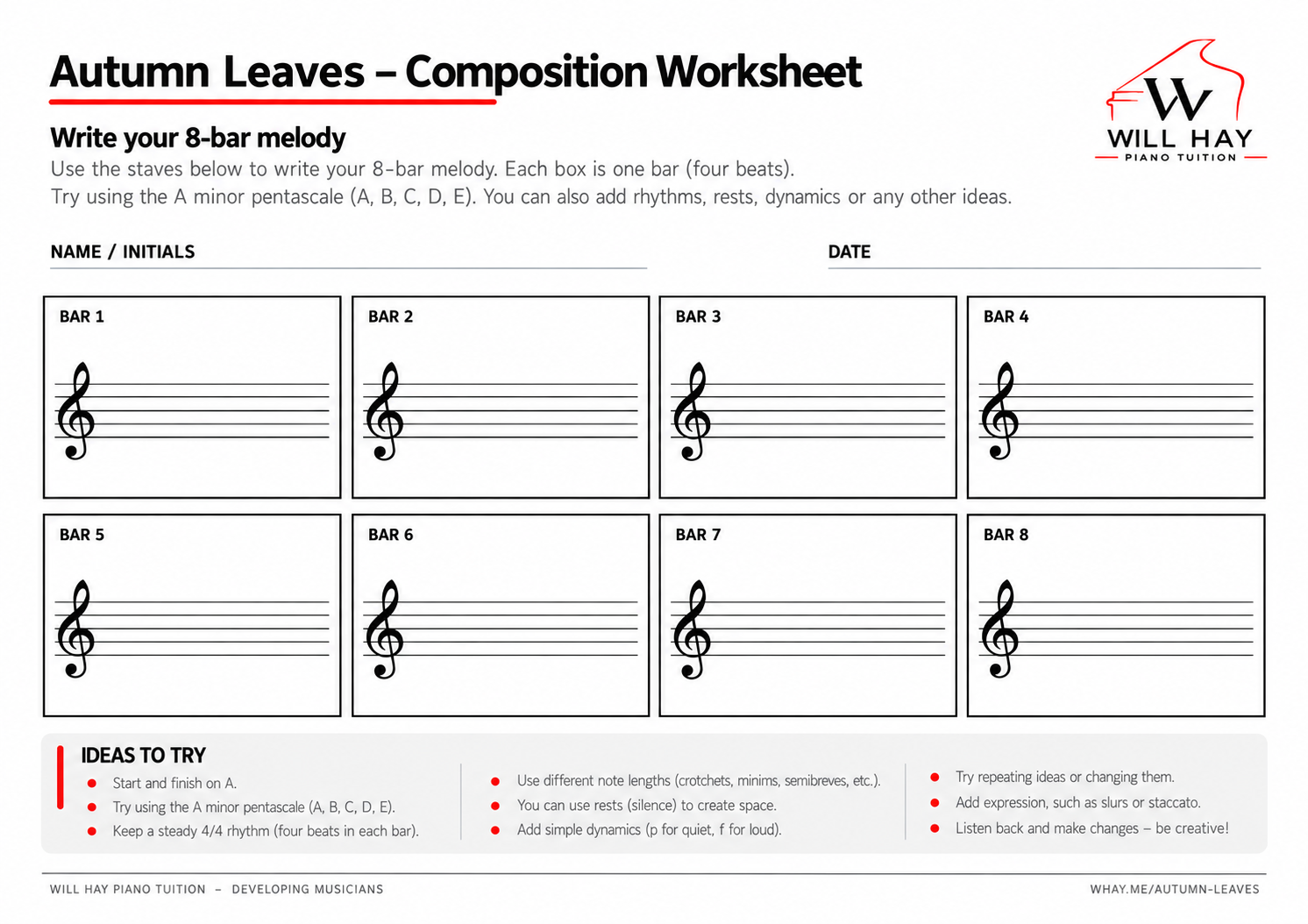
Full notation is not required straight away. Younger students can use letter names or a simple composition grid. More advanced students can write their music more fully or create a score digitally.
The aim is to capture a musical idea once it begins to take shape, rather than letting notation become a barrier to creativity.
Resources
Autumn Leaves in progress
Composition develops gradually. Short recordings from lessons can help students and parents hear how an idea changes from week to week.
Finding the first idea
A short melody begins to emerge through experimenting with notes, rhythm and repetition.
ListenImprovising together
Student and teacher respond to one another across two pianos, developing listening and musical conversation.
ListenAdding an accompaniment
The original melody is played with a second piano part, turning the composition into an ensemble piece.
ListenExamples captured during lessons
How parents can help
- Encourage regular experimenting at the piano.
- Listen to short ideas without worrying about perfection.
- Help students save and revisit recordings of their progress.
- Celebrate musical choices, curiosity and creativity.