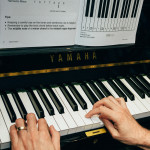
 One of the most important things I realised when I started teaching the piano ten years ago was the value of time I had invested myself (however reluctantly at the time) in learning scale patterns. They really are one of the fundamentals of piano technique upon which much of the repertoire is built. Making it fun or simplifying the task of learning them is always a challenge for the piano teacher. There aren’t really any short cuts however this new book I have come across with visual guides seems to be particularly helpful.
 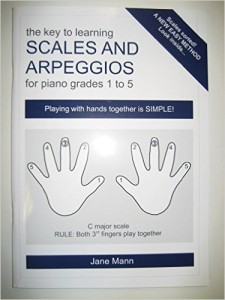 I have tried various cards that you can slot in front of the keys with varying degrees of success. Putting visual fingering guides in a book in this way is brilliant though and it covers the complete set, all the keys you need for Grades 1-5.
the key to learning SCALES AND ARPEGGIOS
by Jane Mann priced at £9.99 is a fantastic resource to make the teaching of scales just a little bit easier, especially when it comes to putting them hands together.
Other resources related to learning to play scales…
 As the exam entry deadline for the next session approaches (Friday 3rd May), the big question on every teacher’s mind is which students are going to be ready to enter this time. Can we afford to leave it another term or is the student going to go “off the boil”? Will the scales be perfected in the next couple of months? Would the pieces be ready in time?