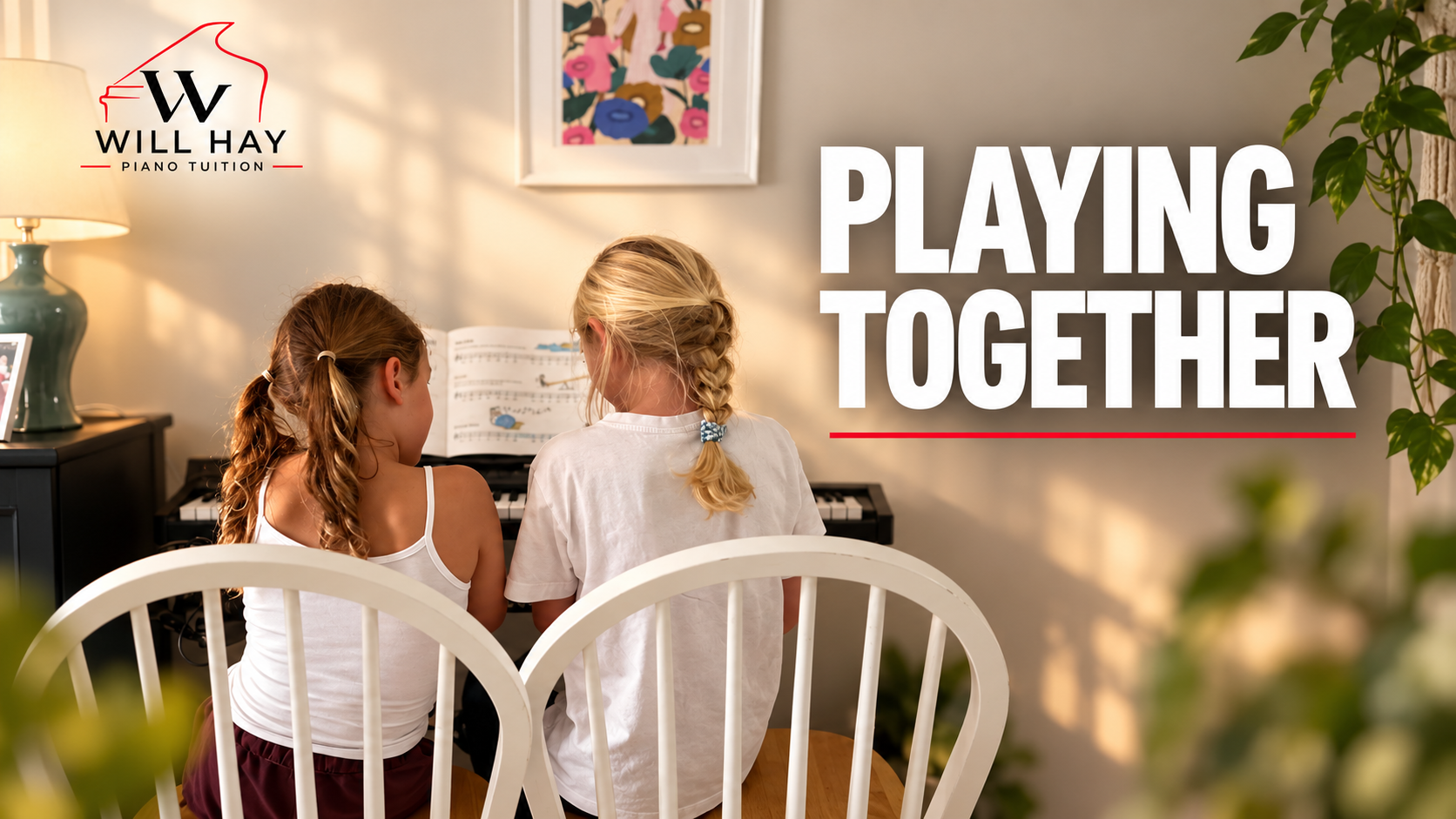
Phoebe and Willow are preparing a duet and have shown great enthusiasm at having the chance to play together, so I thought this would be a good week to talk about duets.
Piano practice is often something we do on our own. A duet gives us someone else to listen to, and another reason to get a piece ready!
There’s quite a lot involved. Both players need to keep a steady pulse, listen to the other part and agree how the music should sound. Getting your own notes right is only part of it. You also need to know how they fit with what the other person is playing.
You also need patience when something doesn’t go according to plan. Your duet partner might hesitate or play a wrong note. In that moment, you have a decision to make. Do you continue, or do you wait for the other person?
With experience, you learn how to keep the music flowing and help each other along. You come to a non-verbal agreement as the music progresses, listening and adjusting, and hopefully arrive at the end of the piece together!
We’ve been exploring listening and responding through the Autumn Leaves project too. The short call-and-response sections give pupils a chance to play an idea, hear an answer and leave space for someone else.
Playing together can also be a lovely way to revisit a favourite piece. Something familiar can feel quite different with another part alongside it, whether that’s a teacher accompaniment or a duet with another pupil.
At home this week, perhaps ask which piece your child would most like to share with someone. It could be something they’re learning now, or an old favourite they still enjoy playing.
I’d be interested to hear their choices. We might find a few ideas for future duets!