Where, when… and what happens next?
This week I’ve been asking my students three simple questions about practice:
Where do you practise?
When do you practise?
Do you receive a reward?
The answers have been fascinating. Most students can tell me where they practise. Far fewer have a clear answer to when.
I’ve heard when Mum reminds me, when I get bored, sometimes after school and at the weekend. One student, though, said before bed, nearly every day.
And I think that’s the missing ingredient: routine.
Making practice part of the day
It’s not necessarily about finding more time. It’s about making piano part of a routine that already exists:
After breakfast. After school. After tea. Before bed.
For younger students, parents will inevitably help establish that routine. But instead of Mum or Dad having to ask “Have you practised?” every day, the routine itself can gradually become the reminder.
Practice isn’t just playing pieces
Practice doesn’t have to mean sitting down and playing through this week’s pieces from beginning to end.
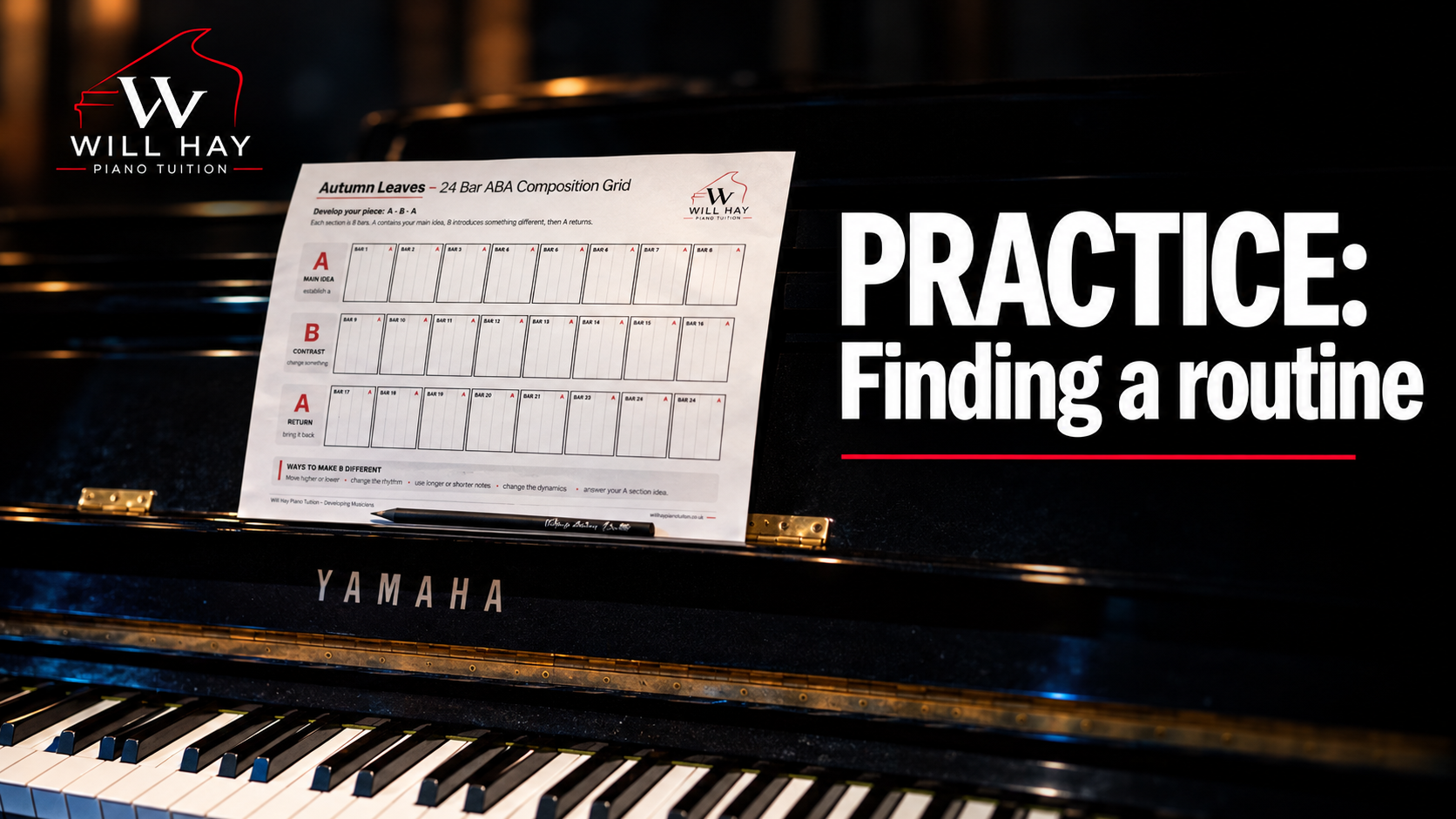
Our Autumn Leaves project has included improvising, composing, experimenting with dynamics and musical games. All of those can be part of practice too.
I’ve recently shared a reel with Ted demonstrating our two-bar call and response activity. It’s something parents can easily try at home, even if they don’t play the piano.
Ask your child to play you a short musical call. Try answering it. Then swap roles.
It doesn’t need to be clever. You’re simply listening, experimenting and making music together.
So a short practice session might include a piece, a tricky passage, some Autumn Leaves call and response, and a few minutes playing something simply because you enjoy it.
Perhaps my original three questions need a fourth:
Where? When? Reward? Routine?
Because the more answers I hear, the more I think routine might be the most important one of all.