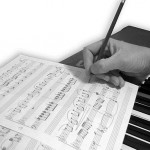
It was great to receive 11 composition submissions to the competition and many of my students had worked hard on their pieces. In the end though I had to come up with two winners from the entries received and these pieces were performed at the concert on 4th December, 2010. I will add some more of the entries in noteflight form to a composition gallery page over the next few weeks.
Please find the winning noteflight scores embedded below to listen to and view.
Though the title is a bit of a tongue-twister the idea is quite straight forward…
This year I am hosting a Christmas Composition Competition to get all my students trying their hand at composing. It is open to all my students and you may compose a song with or without words but there must be a Christmas theme.
The composition must have a suitable title
There must be a piano part which you can play
You may use noteflight to produce a score and have other parts playing at the same time.
The score must be submitted to me (digitally or in print) by the closing date of 27th November, 2010
I will showcase the best entries in a gallery on my website
The winner must be prepared to perform the winning entry at the next concert on 4th December, 2010 2pm at the Music School, The King’s School
I will try to provide support with your compositions over the next few weeks and can give students a session on noteflight in their lessons to get them up to speed.
Many of my students will recollect the “CDE song” as one of the first pieces I taught them on the piano. The song is actually published in “Music Lessons Have Begun, by Leila Fletcher” which was a tutor book I learned from myself as a child, yes it was published that long ago! I don’t use the whole publication as I feel that Pauline Hall’s “Oxford Piano Method” series is visually more user friendly and enticing, though much of Leila’s musical content is very catchy.
“CDE song” was the first piece Oliver learned nearly four years ago and the noteflight arrangement below is his latest piece of work which pays homage to this early experience. This is the second time his work has been featured on my website but the first time in his own notation. See African Elephant
[powerpress] I hope that seeing this will encourage my other students who are using noteflight to experiment with their ideas and share their creative work!
For some beginners, five-finger arrangements of popular pops and classics prove to be more motivational than lesser known tunes serving purely as exercises. This simplified version of Beethoven’s Fur Elise for the absolute beginner requires only a slight change of finger in bars 9-13 where RH finger 4 moves from D# to E and RH finger 5 moves from E to F. At bar 14 the fingers return to their original position.
Changing the metre from three to four eliminates the need for a pickup bar and though it elongates the rests, it is an easier rhythm to feel and play along with the backing track below.
To download the backing track you will need to right-click on the download link then click save as…
Oliver showed me his composition today, which I think was pretty good for an 8 year old. This is the first time I have used Noteflight which is a bit like google docs for musical scores; making the score viewable, searchable and printable on the noteflight site and producing an embeddable, printable flash score for websites and blogs.
It is able to import music xml from other score editors but currently doesn’t support midi input for editing or allow the export of scores once produced.
 It was great to receive 11 composition submissions to the competition and many of my students had worked hard on their pieces. In the end though I had to come up with two winners from the entries received and these pieces were performed at the concert on 4th December, 2010. I will add some more of the entries in noteflight form to a composition gallery page over the next few weeks.
 “CDE song” was the first piece Oliver learned nearly four years ago and the

